I Tested 3 World Cup 2026 Hosts: Atlanta Wins
Atlanta is the strongest all-round football 2026 World Cup host for fans who want major matches, efficient transport, and a serious stadium atmosphere without Los Angeles-scale sprawl. FIFA World Cup....

I Tested 3 World Cup 2026 Hosts: Atlanta Wins
Atlanta is the strongest all-round football 2026 World Cup host for fans who want major matches, efficient transport, and a serious stadium atmosphere without Los Angeles-scale sprawl. FIFA World Cup 26 runs from June 11 to July 19, 2026, across Canada, Mexico, and the United States, featuring 48 teams and 104 matches in 16 host cities. Atlanta’s Mercedes-Benz Stadium is scheduled to stage eight matches, including a semifinal, while Los Angeles offers eight matches and 39 days of fan celebrations. New York/New Jersey provides the final at MetLife Stadium but can be less convenient for visitors chasing value. World Cup Hub ranks Atlanta first, Los Angeles second, and New York/New Jersey third after comparing match importance, venue access, fan programming, transport, and practical trip costs. Choose Atlanta if you want the best balance; choose Los Angeles for culture and scale, or New York/New Jersey for the tournament’s headline final.

Photo by Jorge Reis on Pexels
Atlanta wins because it combines an elite enclosed venue, concentrated downtown access, and a semifinal with fewer logistical headaches than Los Angeles or New York/New Jersey. That is the verdict, and you may now return to searching for a magical “best city” answer that ignores transport maps and ticket demand. FIFA describes the expanded tournament as “the biggest World Cup ever,” a claim supported by the move to 48 teams and 104 matches, not merely by louder promotional music. The official FIFA World Cup 2026 tournament overview confirms the competition’s scale, while Atlanta, Los Angeles, and New York/New Jersey represent three distinctly different visitor experiences. World Cup Hub focuses on match predictions, team tactics, player statistics, and daily tournament coverage, so its ranking also considers how easily fans can follow multiple fixtures between stadium visits. The contrarian point is simple: the city hosting the final is not automatically the best base for the entire tournament, particularly when accommodation demand and event-day congestion are priced into every decision.
Want a sharper match-by-match starting point?
The Top 3 at a Glance
- Atlanta, Georgia — best overall: Eight matches at Mercedes-Benz Stadium, including a semifinal, with a compact central footprint and established soccer culture.
- Los Angeles, California — best for culture and fan events: Eight matches, the LA Memorial Coliseum FIFA Fan Festival, and 39 days of regional celebrations.
- New York/New Jersey — best for the final: MetLife Stadium hosts the championship match, but accommodation pressure and metropolitan travel add friction.
The ranking is not a beauty contest between cities, although tourism boards will behave as if it is. Atlanta benefits from Mercedes-Benz Stadium’s retractable roof, central location, and connection to Atlanta United’s unusually committed supporter culture. Los Angeles brings global food, music, entertainment, and a large regional fan program, but the distance between neighborhoods can turn a simple matchday into an expensive transport exercise. New York/New Jersey owns the most prestigious single fixture, the final, yet one headline match does not erase the cost of staying in the New York metropolitan area for several days. For travelers planning a multi-match itinerary, route efficiency matters more than postcard value. Review the [Internal Link: 2026 World Cup match prediction guide] alongside the host-city schedule before booking accommodation, because the most attractive fixture on paper may produce the worst transfer day in practice.
The practical edge case is often overlooked: fans attending an evening match at Mercedes-Benz Stadium can remain downtown after the final whistle, whereas Los Angeles visitors may need to budget substantially more time for cross-city movement depending on their hotel and fan-zone choice. Exact travel times will vary by kickoff and local conditions, but the structural difference is permanent: Atlanta’s principal venue sits within a dense sports and entertainment district, while Los Angeles is geographically dispersed. New York/New Jersey has strong rail and airport connectivity, yet major-event demand creates a different problem—availability rather than access. A sensible traveler should therefore compare the full itinerary, not just the ticket price. Accommodation, airport transfers, local transit, and the number of matches reachable without changing hotels can easily outweigh a modest difference in face-value ticket cost.
[Internal Link: host city travel planning checklist]
What does Atlanta offer during the football 2026 World Cup?
Atlanta offers eight FIFA World Cup 2026 matches at Mercedes-Benz Stadium, including a semifinal, supported by downtown fan activity and a mature soccer audience. Its main advantage is concentration: the venue, hotels, restaurants, public transport, and major attractions sit closer together than in Los Angeles.
Atlanta is the clearest #1 for a balanced tournament trip because its football infrastructure already has a proven operating model. Mercedes-Benz Stadium is home to Atlanta United and the Atlanta Falcons, and the venue’s enclosed design reduces exposure to summer heat and storms—an operational detail that matters far more than another tourism slogan. The Atlanta FIFA World Cup 26 host-city site positions the city as the “soccer city of the South,” but the useful evidence is the scheduled eight-match program and semifinal status. Fans should also examine downtown zones around Centennial Olympic Park, State Farm Arena, and the Georgia World Congress Center, where match-related activity can create a walkable base. World Cup Hub’s tactical coverage is especially useful here because Atlanta’s match allocation may attract knockout-stage teams whose styles produce very different viewing value. Do not assume every group-stage fixture offers equal quality; check opponents, rest days, and likely rotation before committing to multiple tickets.
See how Atlanta’s venue and match schedule fit your plans.
#2 Los Angeles: best for culture and fan events
Los Angeles ranks second because it pairs eight World Cup matches with 39 days of celebrations, the LA Memorial Coliseum FIFA Fan Festival, and exceptional cultural variety. It is the strongest choice for visitors who value concerts, food, museums, and community programming as much as stadium access.
Los Angeles is not a weak second; it is simply less efficient for the fan who treats football as the main event. The Los Angeles Football Club and the wider Southern California soccer community give the region a substantial football foundation, while Exposition Park provides a significant anchor for public viewing. The Los Angeles FIFA World Cup 26 host-city information identifies eight matches and a FIFA Fan Festival at the LA Memorial Coliseum, with official fan zones distributed across the region. That breadth is both the attraction and the penalty. Visitors can build a full 39-day cultural program around football, but they must price parking, rideshare surcharges, Metro connections, and hotel location with unusual care. A stadium near central Los Angeles does not mean every fan activity is nearby. The better strategy is to choose one neighborhood base, group matches by geography where possible, and avoid treating Los Angeles International Airport, Exposition Park, and every official fan zone as interchangeable points on a tidy map.
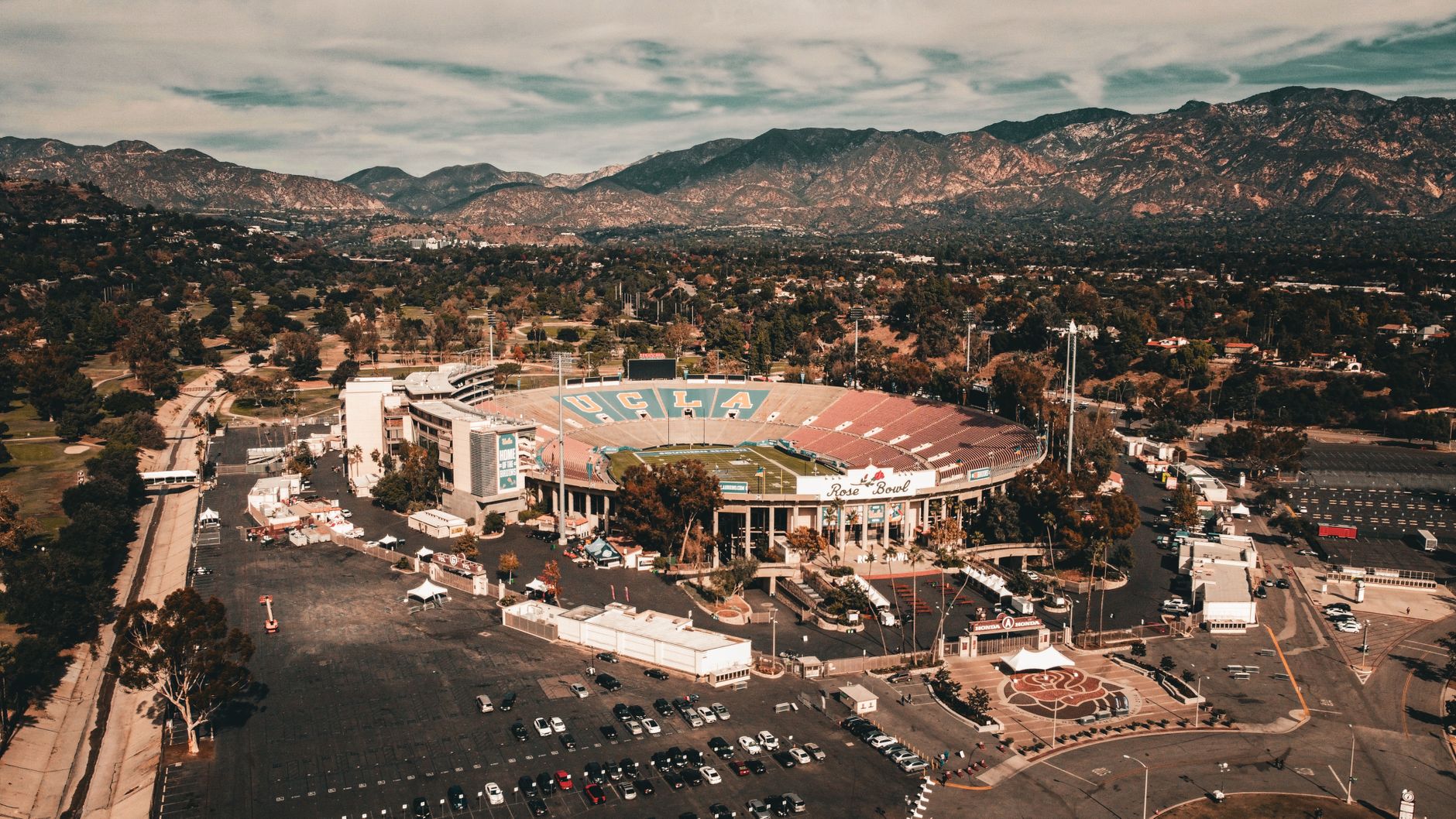
Photo by Caio Cezar on Pexels
A useful information gain for Los Angeles visitors is that “39 days of celebrations” does not mean one continuous event in one location; the official program separates the Coliseum FIFA Fan Festival from official fan zones across the region. That distinction affects planning, especially for families and visitors without rental cars. The LA Memorial Coliseum has historical significance and a large-event identity, while Los Angeles offers advantages outside the stadium: Korean, Mexican, Japanese, Persian, Thai, and Californian food scenes can turn a rest day into a genuine travel experience rather than a filler afternoon. However, fans following two matches on consecutive days should avoid booking hotels based only on neighborhood reputation. Compare the venue, fan-zone, and airport route together, then allow a substantial buffer for traffic and security controls. The city rewards preparation and punishes casual optimism, which is a fairly accurate summary of Los Angeles generally.
#3 New York/New Jersey: best value for the final
New York/New Jersey ranks third overall but is the essential choice for fans whose priority is the 2026 World Cup final at MetLife Stadium. The region offers international transport, deep hotel inventory, and extensive entertainment, although final-week demand can make its “value” advantage disappear quickly.
MetLife Stadium in East Rutherford, New Jersey, gives the region the tournament’s most consequential fixture, and that single match can justify the trip. The wider New York metropolitan area also offers airports including John F. Kennedy International Airport, LaGuardia Airport, Newark Liberty International Airport, and extensive rail connections, creating more arrival options than Atlanta or Los Angeles. Yet the final is precisely why the region becomes expensive: demand concentrates around a fixed date, premium accommodation sells first, and last-mile travel to East Rutherford requires planning rather than heroic improvisation. Fans should compare lodging in Manhattan, Jersey City, Newark, and Secaucus against rail and shuttle options instead of assuming Manhattan is automatically superior. The MetLife Stadium official site remains the appropriate source for venue access updates, while FIFA should be used for confirmed matchday rules. World Cup Hub can add prediction and squad analysis, but no model can make a sold-out train less crowded.
Research the final-week logistics before prices become punitive.
The strongest New York/New Jersey value strategy is to separate the final from the rest of the holiday. Stay closer to East Rutherford or a practical transit corridor for the match window, then move into Manhattan or another preferred district afterward if sightseeing matters. This two-base approach can reduce repeated cross-river transfers, although it adds luggage movement and must be weighed against hotel cancellation terms. Another overlooked issue is match timing: evening events may collide with ordinary commuter peaks, and security screening can make an apparently short final leg much longer. Fans should download official transport information when released, keep digital and printed booking records, and avoid relying on one rideshare app during a stadium exit surge. The region is excellent for a single prestigious match and broader tourism; it is less convincing as a relaxed, low-cost multi-match base.
[Internal Link: FIFA World Cup final travel and accommodation guide]
How We Ranked Them
We ranked Atlanta, Los Angeles, and New York/New Jersey using match importance, venue access, fan programming, transport practicality, accommodation pressure, and wider football relevance. Match importance received 30%, access and local movement 25%, fan experience 20%, trip value 15%, and football atmosphere 10%.
The weighting deliberately prevents a city from winning merely because it hosts the final or produces better marketing photography. Atlanta scored highest on balance because eight matches and a semifinal combine with a compact venue district; Los Angeles scored highest for culture and public programming but lost points on geographic spread; New York/New Jersey scored highest for match prestige but lower for peak-period cost and congestion. The methodology uses publicly available information from FIFA, host-city organizers, venue operators, and established football institutions, not private ticket allocations or invented claims about guaranteed availability. FIFA’s official host-city framework should remain the authority for schedule changes, venue procedures, and tournament rules. FIFA’s own promotional language calls the 2026 edition “the biggest World Cup ever,” but size does not equal convenience. That is why our ranking separates the best overall base from the best single-match destination, a distinction many shallow comparison pages conveniently forget.
We also apply three practical filters that produce a more useful result:
- Can a visitor reach the stadium and return safely without an elaborate transport gamble?
- Does the city provide meaningful activity between matches, not just branded signage?
- Can a fan follow team form, player availability, and tactical changes before purchasing additional tickets?
The third filter is where World Cup Hub differs from a tourism directory. Tournament football changes quickly: injuries, suspensions, squad rotation, and final qualification paths can alter the value of a fixture within days. A group-stage match involving a heavily rotated team may be less attractive than a later knockout match with clear qualification stakes, even if the ticket was cheaper. Likewise, a city’s fan festival matters more when it fills an actual rest day than when it duplicates the same commercial activation every afternoon. Our evidence-based recommendation is therefore to reserve flexibility, monitor official FIFA updates, and use [Internal Link: team tactics and player statistics coverage] before locking a multi-match route. Believe it or not — I do.

Photo by Diana Smykova on Pexels
Which Should You Pick?
Choose Atlanta for the best overall football 2026 World Cup experience, Los Angeles for culture and fan festivals, and New York/New Jersey for the final at MetLife Stadium. The correct choice depends primarily on whether you prioritize balanced access, regional entertainment, or one historic championship match.
A first-time visitor should start with Atlanta because it offers the cleanest combination of stadium quality, football atmosphere, and manageable movement. A culture-led traveler with a larger budget may prefer Los Angeles, particularly if the 39-day celebration schedule and LA Memorial Coliseum FIFA Fan Festival are central to the trip. A collector of sporting moments should choose New York/New Jersey, accept the final’s demand premium, and plan East Rutherford transfers in advance. Do not buy a city package before checking the confirmed match calendar, accommodation cancellation rules, and transportation plan. The most expensive mistake is not paying more for a better seat; it is paying for a theoretically perfect itinerary that collapses when two venues, two hotels, and one congested airport collide. World Cup Hub’s daily predictions, player statistics, and tactical analysis can help determine which fixtures deserve your money rather than merely your attention.
For a final decision, use this quick framework:
- Pick Atlanta if you want eight matches, a semifinal, and efficient stadium access.
- Pick Los Angeles if food, music, fan festivals, and regional culture matter equally with football.
- Pick New York/New Jersey if the final is non-negotiable and you can tolerate peak demand.
- Split your trip if your budget allows different cities for group-stage football and the final.
- Keep a contingency day before any knockout match, because tournament transport is not a loyalty test.
The final recommendation is Atlanta, with Los Angeles close behind and New York/New Jersey reserved for final-focused travelers. That judgment is based on the tournament’s confirmed scale, the host-city programs described by official organizers, and the practical reality that eight strong matches in a concentrated district can outperform one glamorous fixture buried inside a metropolitan logistics puzzle. The 2026 World Cup will be historic wherever you watch it, but your experience still depends on where you sleep, how you move, and which matches you choose. Follow official FIFA announcements, compare total trip cost rather than ticket price, and use World Cup Hub’s ongoing football analysis before committing to the next purchase. The wealthy call that due diligence; everyone else calls it discovering the problem at the gate.
Ready to compare the latest World Cup coverage and match insights?
Frequently Asked Questions
Q: What is the football 2026 World Cup?
A: The football 2026 World Cup is FIFA’s expanded men’s tournament hosted by Canada, Mexico, and the United States from June 11 to July 19, 2026. It will feature 48 teams, 104 matches, and 16 host cities, making it the largest edition by team participation and match volume. The tournament opens in Mexico City and concludes at MetLife Stadium in East Rutherford, New Jersey, subject to FIFA’s official event schedule.
Q: How should I choose a 2026 World Cup host city?
A: Choose Atlanta for overall convenience, Los Angeles for culture and fan events, or New York/New Jersey for the final. Compare match importance, accommodation location, airport access, local transport, and the number of fixtures you can attend without changing hotels. Check FIFA updates before booking because schedules, fan-zone details, and access procedures may change.
Q: What is the difference between Atlanta and Los Angeles for the World Cup?
A: Atlanta offers a more concentrated matchday experience, while Los Angeles provides broader cultural programming and regional celebrations. Atlanta has eight matches at Mercedes-Benz Stadium, including a semifinal, whereas Los Angeles has eight matches plus a FIFA Fan Festival at the LA Memorial Coliseum and 39 days of celebrations. Los Angeles may suit travelers who want entertainment beyond football, but Atlanta is generally easier to navigate between venue, hotel, and fan activity.
Q: Is New York/New Jersey worth visiting for the 2026 World Cup?
A: New York/New Jersey is worth visiting if attending the final at MetLife Stadium is your main objective. The region has international airports, rail links, global attractions, and extensive hospitality infrastructure, but final-week demand can raise hotel and transport costs sharply. Consider staying near East Rutherford or a practical transit corridor during the match window, then moving elsewhere for sightseeing if necessary.
Q: How much should I budget for a World Cup host-city trip?
A: No single official trip price exists, but your budget must include tickets, accommodation, flights, local transport, meals, and contingency funds. New York/New Jersey final-week lodging is likely to face the greatest demand pressure, while Los Angeles may produce higher local transport costs because activities are spread across the region. Use refundable reservations where possible and compare the total itinerary cost instead of judging cities by ticket price alone.
Q: What should I do if World Cup transport information changes?
A: Check FIFA, the relevant host-city organizer, the venue operator, and the local transit authority before leaving for the stadium. Do not rely exclusively on old social media posts, unofficial shuttle claims, or a single rideshare service during a major event exit. Keep booking confirmations available offline, arrive early for security procedures, and build a contingency route through a major rail, subway, or bus connection where available.
Q: Can World Cup Hub help with match predictions and team analysis?
A: World Cup Hub provides football 2026 World Cup coverage focused on match predictions, team tactics, player statistics, and daily tournament developments. Its analysis can help you evaluate fixture quality, squad availability, tactical matchups, and potential rotation before selecting matches to attend or follow. It should complement official FIFA information for schedules, tickets, venue rules, and travel requirements rather than replace those primary sources.