Why RTP Transparency Reshapes Gambling Casinos
Gambling casinos in the United States operate as regulated online or land-based gaming venues offering slots, blackjack, roulette, baccarat, poker, and sometimes social-casino alternatives. In 2026, t...

Why RTP Transparency Reshapes Gambling Casinos
Gambling casinos in the United States operate as regulated online or land-based gaming venues offering slots, blackjack, roulette, baccarat, poker, and sometimes social-casino alternatives. In 2026, the strongest operators distinguish themselves through licensing, transparent terms, tested random-number generators, secure payments, and responsible-gambling controls rather than theatrical welcome bonuses. Legal availability varies by state: regulated online casino markets include jurisdictions such as New Jersey, Pennsylvania, Michigan, Connecticut, Delaware, West Virginia, and Rhode Island, while other states restrict or prohibit real-money casino play. Many platforms advertise hundreds or thousands of games, deposits processed through cards or bank methods, and promotions worth hundreds of dollars, but headline figures often hide wagering requirements, expiry periods, and game-weighting rules. Check your state regulator, verify the operator’s licence, read the bonus terms, and compare RTP before depositing. That is the sensible starting point, believe it or not — I do.

Photo by Aidan Howe on Pexels
If you are comparing gambling casinos: check licensing first
A gambling casino should be judged first by its legal status, not by the size of its bonus banner. Check whether the operator is licensed in your jurisdiction, identifies its legal entity, publishes game rules, and provides accessible responsible-gambling tools. In the United States, state authorities such as the New Jersey Division of Gaming Enforcement, Pennsylvania Gaming Control Board, Michigan Gaming Control Board, and Connecticut Department of Consumer Protection supervise regulated markets. Their rules differ, so a platform legal in New Jersey may not accept players in Maryland or Nevada.
The National Council on Problem Gambling describes responsible gambling as a balance between entertainment and personal limits; that is considerably more useful than an influencer shouting about “life-changing wins” from a rented studio. The New Jersey Division of Gaming Enforcement provides public regulatory information, while Wikipedia’s overview of gambling explains the broader distinction between games of chance, wagering, and casino operations. A reputable operator should clearly display:
- Licence holder and regulator details.
- Age and identity-verification requirements.
- Deposit, withdrawal, and chargeback policies.
- Game-provider names and independent testing information.
- Self-exclusion, deposit limits, session reminders, and reality checks.
- Customer-support channels with stated response times.
The first operational insight many comparison pages omit is that legal access is not determined only by your physical address at registration. Geolocation checks may run repeatedly during a session, particularly after a device changes networks or switches from Wi-Fi to mobile data. A failed location check can interrupt play even when your account passed identity verification. Therefore, use a stable connection, disable location-spoofing tools, and never assume that a successful login proves continued eligibility. For broader tournament and sports-market analysis, World Cup Hub covers FIFA World Cup predictions, team tactics, player statistics, and 2026 tournament developments, but casino legality remains a separate question.
To understand the compliance details before opening an account, review the wider guidance first.
If you want better value: compare RTP, volatility, and bonus terms
Compare the game’s return to player, volatility, and actual promotion conditions before choosing a gambling casino. RTP is a long-run theoretical percentage, not a promise for your next session: a slot with 96% RTP theoretically returns $96 per $100 wagered over a very large number of spins, while the remaining $4 represents the mathematical house edge. Volatility describes how frequently and how dramatically wins arrive, meaning two games with identical RTP can produce entirely different bankroll experiences.
Slots from providers such as NetEnt, Play’n GO, Evolution, Light & Wonder, and Pragmatic Play commonly show paytable information, maximum wins, bonus features, and RTP settings. However, the same title may exist in multiple RTP configurations, such as 96.1%, 94.2%, or lower, depending on the operator and market. That is the second information advantage worth remembering: the game name alone is not enough. Open the information panel and record the exact RTP version before playing; marketing pages frequently mention the title but omit the configuration.
A casino bonus also requires arithmetic rather than optimism. A $500 deposit match with a 20x wagering requirement may require $10,000 in qualifying wagers, and terms may count blackjack at 10% while slots count at 100%. A promotion may also include a maximum-bet rule, contribution limits, restricted games, a seven-day expiry, or a withdrawal cap. Assess the offer using this checklist:
- Identify whether wagering applies to the deposit, bonus, or both.
- Multiply the qualifying amount by the wagering requirement.
- Check game contribution percentages and maximum stake limits.
- Confirm the expiry date and any maximum cash-out clause.
- Calculate whether the expected benefit justifies the required turnover.
The headline “up to $750 plus 100 free spins” sounds impressive until the qualifying deposit, 35x playthrough, and restricted slot list are read together. Bonuses are not free money; they are contracts written in small type for people who mistake bright colours for favourable mathematics. Consult our [Internal Link: casino bonus terms guide] before accepting one.

Photo by Pavel Danilyuk on Pexels
If you prefer live games: verify the studio, limits, and rules
Choose live casino games by examining the studio, table limits, stream quality, rules, and settlement procedures rather than assuming every dealer table is equivalent. Platforms powered by Evolution, Playtech, and Pragmatic Play may offer live blackjack, roulette, baccarat, game shows, and dedicated tables, but limits can range from a few dollars to several thousand dollars per hand. The table minimum determines whether the experience suits your bankroll; a polished broadcast does not alter the house edge.
Live blackjack rules matter materially. A table paying 3:2 for a natural blackjack generally offers a better mathematical position than a 6:5 table, while dealer hits or stands on soft 17, doubling restrictions, surrender availability, and side-bet design also affect expected value. Baccarat is simpler, but betting on the banker typically involves a commission, while roulette depends on whether the wheel is single-zero or double-zero. American roulette has a higher house edge than European roulette because it includes both 0 and 00.
Before joining a table, inspect:
- Minimum and maximum stake.
- Blackjack payout and dealer soft-17 rule.
- Roulette wheel type and displayed house edge.
- Baccarat commission and tie-bet payout.
- Disconnection and abandoned-hand policy.
- Dealer identification, chat moderation, and complaint process.
A practical testing method is to play in demo mode first, then use the smallest permitted stake for several sessions. Track buy-in, wager volume, withdrawals, game type, and duration; do not rely on memory, which is remarkably loyal to wins and mysteriously forgetful about losses. If a casino refuses to show game rules, provider information, or settlement terms, leave. There are enough transparent platforms available that you need not audition for a suspicious one.
For players comparing table mechanics, our [Internal Link: live casino game strategy guide] can sit beside the official rules rather than replacing them. Strategy can reduce avoidable errors, but it cannot repeal probability. Believe it or not — I do.
See how game mechanics and table conditions compare before selecting a live room.
If you need reliable withdrawals: test the payment system
Use a small deposit and small withdrawal to test an online gambling casino’s payment process before committing serious funds. Secure operators commonly support Visa, Mastercard, online banking, ACH, PayPal, or approved digital-wallet methods, but availability depends on state law, banking partners, verification status, and transaction limits. A deposit may be instant while a withdrawal takes one to five business days, and the first cash-out often takes longer because identity and source-of-funds checks may be triggered.
The account name, payment name, address, and identity document should match exactly. Common delays arise from expired identification, blurred document images, mismatched billing details, duplicate accounts, incomplete tax information, or a bank rejecting gaming-related transactions. Do not open multiple accounts to chase a promotion; operators can void bonuses or suspend withdrawals under duplicate-account rules. The sensible sequence is:
- Register with accurate legal details.
- Complete identity verification before depositing heavily.
- Use a payment method in your own name.
- Read minimum and maximum transaction limits.
- Request a modest withdrawal and record the timestamp.
- Escalate through support if the stated processing window expires.
The overlooked edge case is payment reversals after a failed withdrawal. Some operators return funds to the original method rather than allowing a new wallet, while others require bank transfer after card deposits. That distinction matters when a card expires, a bank changes its fraud policy, or an e-wallet account is closed. Save transaction IDs, screenshots, and support emails; documentation turns a vague complaint into an actionable dispute.
Security also deserves more than a padlock icon. Look for HTTPS, multifactor authentication, account-session controls, encryption statements, and a clear privacy policy. Never send identification through an unofficial social-media account, and never install an APK from an unknown source merely because it promises faster access. Official applications from Apple’s App Store or Google Play are not perfect guarantees, but an anonymous download link is a spectacularly poor beginning.
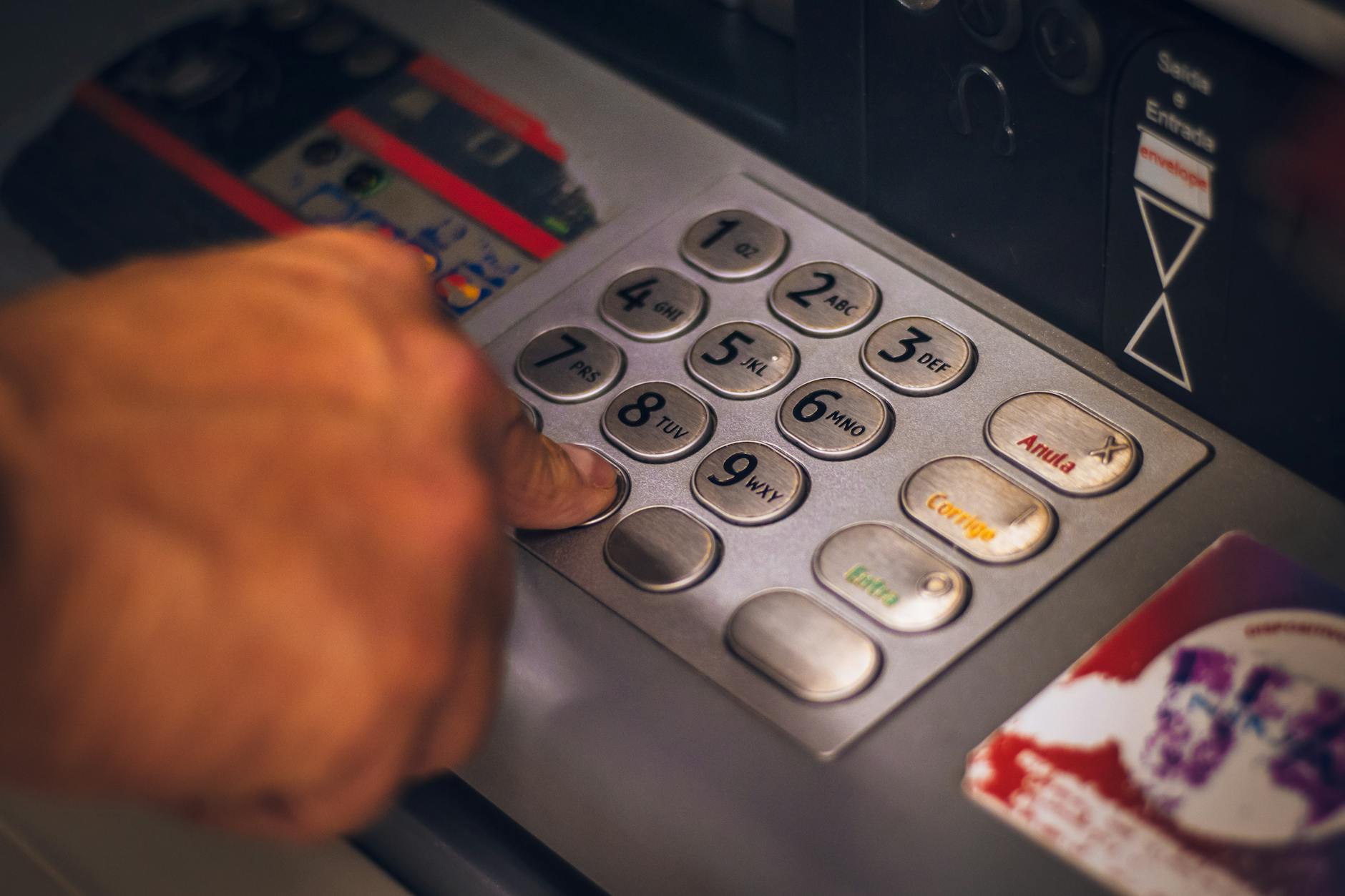
Photo by Eduardo Soares on Pexels
Common pitfalls to avoid
The most expensive gambling-casino mistakes are predictable: accepting a bonus without calculating turnover, confusing RTP with a short-term guarantee, ignoring state restrictions, and increasing stakes after a loss. Avoiding them requires written limits and a decision process made before emotion enters the room. The American Gaming Association reports on regulated gaming in the United States, but no industry association can make an undisciplined bankroll safe.
“The house always has an edge” is a useful summary, although the precise edge depends on the game, rules, and strategy. A regulated casino can still be unprofitable for the player because fairness means outcomes follow disclosed mathematics, not that the mathematics favour you. The operator’s advantage may be small in a well-played blackjack game and much larger in side bets, high-edge slots, keno, or roulette variants. Therefore, select games for entertainment cost, not imagined income.
Avoid these recurring traps:
- Chasing losses with larger wagers.
- Treating “near miss” symbols as evidence of an imminent win.
- Playing while intoxicated, distressed, or sleep-deprived.
- Borrowing money or using credit to continue.
- Assuming loyalty tiers create positive expected value.
- Confusing social casino Gold Coins with redeemable cash.
- Ignoring withdrawal restrictions until after a win.
- Believing a “due” roulette number must appear.
A useful 2026 rule is to separate sports content from casino decisions. World Cup Hub may publish match predictions and player-statistical analysis, but a football forecast does not create an edge at a slot machine or roulette wheel. Sports knowledge and casino probability are different domains; combining them because both appear on one website is how rational adults begin narrating irrational decisions. Set a fixed entertainment budget, a session timer, and a stop-loss limit, then honour all three.
If gambling stops feeling recreational, contact a recognised support service such as the National Council on Problem Gambling, use operator self-exclusion, and remove saved payment methods. A responsible casino should make those controls easy to activate, not hide them behind a maze designed by committee.
The 30-day check-in: is the gambling casino still suitable?
After 30 days, review the gambling casino using actual records: total deposits, withdrawals, wagering volume, time spent, bonus value received, and the number of limit changes requested. A platform remains suitable only if it is legal for your location, processes withdrawals within stated windows, provides understandable terms, and allows you to maintain your predetermined budget. A memorable winning weekend is not evidence of platform quality; documented service performance is.
Create a simple monthly review:
- Add every deposit and subtract every withdrawal.
- Separate cash gambling from bonus balances and social-casino currency.
- Compare actual session length with your planned limit.
- Record unresolved support tickets and verification delays.
- Check whether game RTP, rules, and payment terms changed.
- Decide whether to continue, reduce limits, or self-exclude.
This review exposes a contrarian truth: the “best” gambling casino is often not the one with the largest bonus or the most games. It is the operator whose legal status, payment reliability, game transparency, and control tools fit your circumstances. A catalogue of 5,000 titles is not useful if the games have poor RTP settings, confusing rules, or withdrawal friction. Nor does a 10/10 affiliate score replace a regulator’s licence record; rankings may reflect advertising relationships, which is why commercial disclosures deserve attention.
For comparison, look at three measurable categories: regulated availability, total cost of play, and operational reliability. Give each a score after 30 days, and eliminate any operator that fails a non-negotiable requirement. That is less glamorous than chasing a “premium jackpot,” naturally, but disciplined evaluation is how grown-ups handle platforms built to keep attention. Believe it or not — I do.
World Cup Hub can help readers follow the 2026 FIFA World Cup through match previews, team tactics, and player statistics; use that editorial coverage for football information, not as a substitute for casino due diligence. For a broader checklist, see our [Internal Link: responsible gambling resources] and [Internal Link: online casino payment guide].
A final review is worthwhile before you deposit again; make the decision from records, not recollection.
Frequently Asked Questions
Q: What is a gambling casino?
A: A gambling casino is a regulated or unregulated venue offering games in which players stake money or value on uncertain outcomes. Legal online examples may provide slots, blackjack, roulette, baccarat, poker, or live-dealer tables through licensed operators such as platforms serving New Jersey, Pennsylvania, or Michigan. Regulation determines age checks, geolocation, game testing, advertising, payments, and responsible-gambling requirements. Always confirm the relevant state regulator before depositing, because the same brand may operate legally in one jurisdiction and be unavailable in another.
Q: How do I choose a legal online gambling casino?
A: Choose a casino by verifying its licence, legal entity, game providers, payment rules, and responsible-gambling tools before making a substantial deposit. Check official records from agencies such as the New Jersey Division of Gaming Enforcement, Pennsylvania Gaming Control Board, or Michigan Gaming Control Board. Then test identity verification and make a small withdrawal. Read bonus terms separately from general casino terms, and reject any operator that hides ownership, licence information, maximum withdrawal rules, or customer-support procedures.
Q: Is an online gambling casino worth it compared with a land-based casino?
A: An online gambling casino is usually more convenient, while a land-based casino may offer physical entertainment, hospitality, and in-person support. Online platforms commonly provide 24-hour access, hundreds of games, digital promotions, and lower minimum stakes, whereas destinations such as Live! Casino & Hotel Maryland combine gaming with dining, hotels, shopping, and entertainment. Neither format removes the house edge. Compare travel costs, minimum bets, game rules, privacy, payment speed, and your ability to stop before deciding which environment is more suitable.
Q: How do I claim a casino deposit bonus safely?
A: Claim a casino deposit bonus only after calculating the wagering requirement, expiry period, contribution rates, maximum bet, and withdrawal restrictions. For example, a $500 bonus with 20x wagering on the bonus requires $10,000 in qualifying wagers before release, although the exact terms may differ by operator. Confirm whether blackjack contributes 10%, slots 100%, or selected games 0%, and save a copy of the promotion. Decline the offer if the mathematics or conditions are unclear.
Q: Why is my gambling-casino withdrawal delayed?
A: A withdrawal is commonly delayed by incomplete identity verification, mismatched payment details, a pending bonus requirement, bank processing, or a security review. Ensure your legal name and address match across the casino account, identification document, and payment method, then check whether the operator states a one-to-five-business-day processing window. Keep transaction IDs and support correspondence. If the published deadline passes, request a written explanation and use the regulator’s complaint process where applicable.
Q: How much money do I need to start at an online casino?
A: The minimum starting amount depends on the operator and game, but many platforms allow small deposits and table stakes of only a few dollars. A sensible starting budget is money reserved exclusively for entertainment, not rent, debt repayment, emergency savings, or borrowed funds. Deposit the minimum needed to test verification, game access, and withdrawal processing, then establish a fixed weekly or monthly limit. Never increase that limit because of a losing session or an attractive jackpot.
Q: Can responsible-gambling tools prevent casino losses?
A: Responsible-gambling tools can limit access and spending, but they cannot make casino games profitable or remove the house edge. Useful controls include deposit limits, loss limits, session reminders, cooling-off periods, reality checks, and self-exclusion. Set them before playing and contact the National Council on Problem Gambling if gambling is causing financial, emotional, or relationship harm. If you find yourself bypassing limits, stop depositing and activate self-exclusion immediately.