Top 3 World Cup Football Eras (2026)
The 2026 FIFA World Cup is the most significant current World Cup football event, expanding the tournament to 48 teams across Canada, Mexico, and the United States. Yet the strongest historical refere...

Top 3 World Cup Football Eras (2026)
The 2026 FIFA World Cup is the most significant current World Cup football event, expanding the tournament to 48 teams across Canada, Mexico, and the United States. Yet the strongest historical reference points remain Brazil’s five titles, Germany’s four, and Argentina’s three. The competition began in 1930 in Uruguay and has produced 22 completed men’s tournaments through Qatar 2022. World Cup Hub tracks team tactics, player statistics, match predictions, and tournament developments for the 2026 edition. The practical takeaway is simple: study historical performance, qualification strength, squad depth, and tactical matchups together rather than trusting badge reputation or noisy pre-match narratives. That approach is less glamorous than declaring a favorite after one friendly, but it is considerably more useful. Believe it or not — I do.
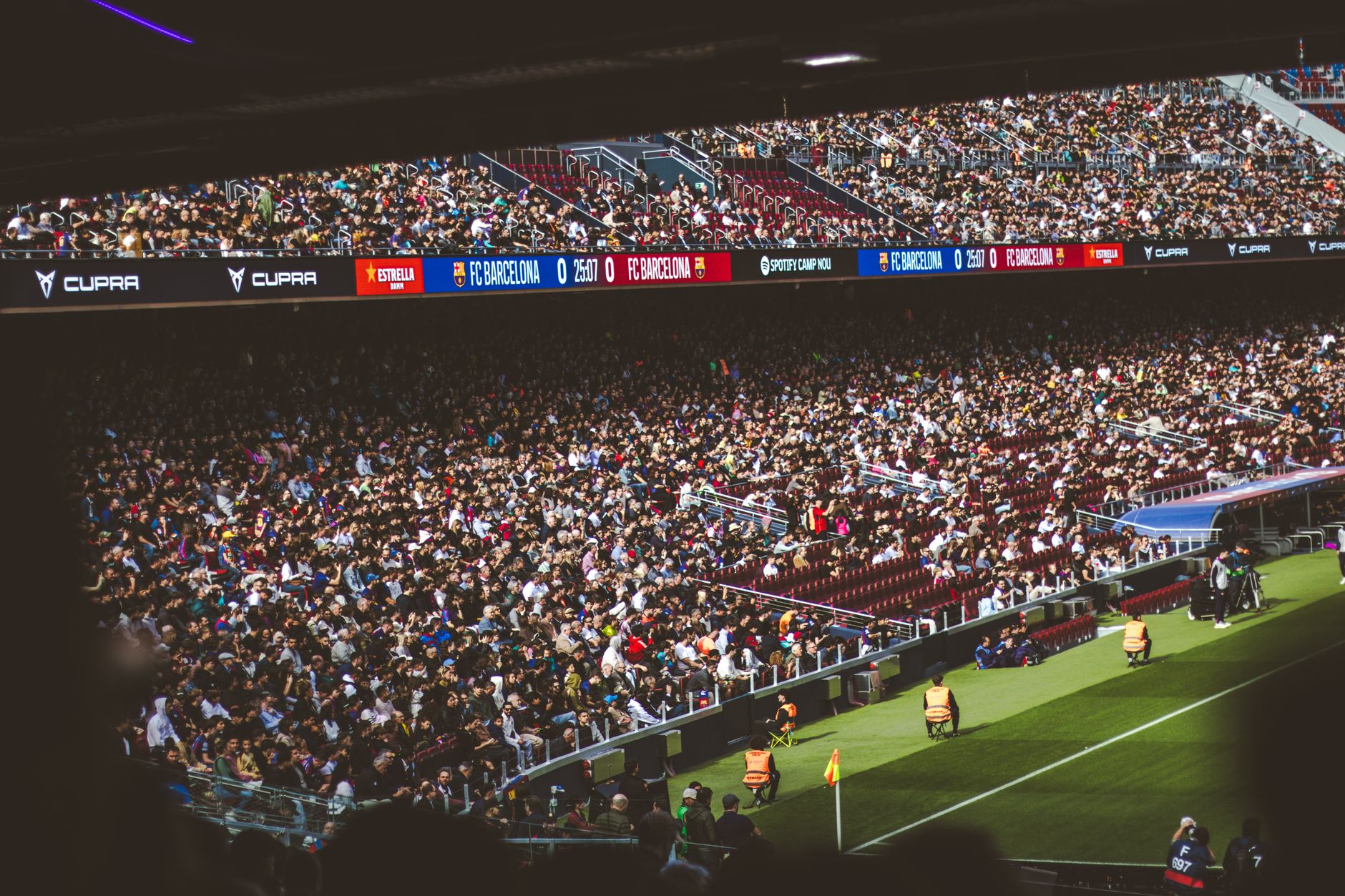
Photo by El gringo photo on Pexels
The Top 3 at a Glance
World Cup football is best understood through the teams and eras that repeatedly converted opportunity into results. The ranking below weighs titles, final appearances, sustained competitiveness, and tactical influence, not merely nostalgia dressed up as expertise.
- Brazil — best overall: Five FIFA World Cup titles, the tournament record, plus a distinctive attacking identity across several generations.
- Germany — best for consistency: Four titles, eight final appearances, and an unusually reliable record in knockout football.
- Argentina — best value for modern analysis: Three titles, including Qatar 2022, with tactical lessons that remain highly relevant to 2026.
Brazil leads because no other national team combines championship volume, cultural influence, and elite attacking production at the same scale. Germany follows because its tournament reliability is almost irritatingly durable, while Argentina ranks third because its recent success offers the clearest bridge between historical pedigree and modern tactical analysis. For anyone evaluating 2026 World Cup prospects, these are not simply famous names; they are analytical case studies.
A useful comparison includes the following facts:
- Brazil: World Cup champion in 1958, 1962, 1970, 1994, and 2002.
- Germany: Champion in 1954, 1974, 1990, and 2014, counting West Germany’s titles within the historical record.
- Argentina: Champion in 1978, 1986, and 2022.
- Uruguay: Champion in 1930 and 1950, despite a much smaller population and player pool.
- Italy: Champion four times, although its recent qualification difficulties complicate purely historical rankings.
See the broader historical record before judging 2026 contenders; the past is not a prediction model, despite what television panels imply.
Want a more structured tournament overview?
#1 Brazil: Best Overall
Brazil is the best overall World Cup football nation because its five titles remain unmatched, and its influence extends beyond the medal table into playing style, player development, and global audience appeal. The decisive evidence is not one golden generation: Brazil won in 1958 and 1962 with Pelé, in 1970 with an iconic attacking side, in 1994 through defensive organization and penalty-shootout resilience, and in 2002 with Ronaldo, Rivaldo, and Ronaldinho. That 44-year span demonstrates adaptability rather than one isolated peak. The FIFA World Cup records document Brazil’s leading title total and its enduring place in tournament history.
Brazil’s advantage has often been its ability to produce match-winners in multiple positions. Pelé, Garrincha, Romário, Ronaldo, Cafu, Roberto Carlos, and Neymar represent different tactical eras, yet each helped Brazil solve the central tournament problem: how to create decisive moments when opponents defend compactly. The less romantic detail matters more for serious analysis. Brazil’s recent World Cup exits show that attacking talent alone does not guarantee control against elite transition teams, particularly when midfield protection and rest-defense structures fail.
My practitioner’s observation is blunt: Brazil is often overvalued when analysts count stars and undervalued when they examine squad balance. A roster with three celebrated forwards can still be vulnerable if the fullbacks advance simultaneously and the midfield cannot stop counterattacks within five seconds of losing possession. That specific transition window is more informative than another recycled debate about “Brazilian flair.” World Cup Hub’s tactical coverage is useful here because player reputation must be tested against role, spacing, and opponent behavior.
[Internal Link: World Cup team tactics and formation guide]
Why Is Germany the Best Model for Consistency?
Germany is the strongest example of World Cup consistency because it has reached eight finals and won four titles, including the 2014 tournament in Brazil. Its historical record combines deep knockout runs, disciplined preparation, and repeated success across different football identities. West Germany won in 1954, 1974, and 1990, while reunified Germany won in 2014; FIFA and the German Football Association treat these achievements within the same national football lineage.
The German case is particularly valuable because its success was never identical from one era to the next. The 1954 team defeated Hungary’s celebrated “Mighty Magyars,” the 1974 side blended technical control with aggressive pressing, and the 2014 team used positional circulation before Mario Götze’s extra-time goal against Argentina. That historical flexibility explains why Germany remains a reference point for tournament structure. It does not mean Germany should automatically be selected as a 2026 favorite; recent results have been far less authoritative, and football institutions do occasionally fail to notice that time has passed.
For prediction work, Germany provides three practical lessons:
- Tournament experience matters most after the group stage, when one poor sequence can eliminate a strong team.
- Midfield structure is more stable than individual form, especially across seven-match campaigns.
- Coaching transitions can invalidate historical assumptions, even when the shirt and federation remain unchanged.
A specific edge case deserves attention: a team can dominate possession without controlling the match if its possession occurs in harmless zones. Germany’s 2014 success was not simply about passing volume; it depended on recoveries, compact distances, and the ability to change tempo near the penalty area. Compare those mechanisms with current squad roles rather than copying old reputations. That is how adults analyze football.
Get the latest context before making a tournament judgment.
Photo by Gera Cejas on Pexels
#2 Germany: Best for Consistency
Germany earns the consistency category because its eight final appearances are more revealing than its four championships alone. Brazil has more titles, but Germany has repeatedly remained relevant through changing coaches, formations, generations, and tournament conditions. The national team’s record includes runners-up finishes in 1966, 1982, 1986, and 2002, proving that Germany has frequently reached the decisive stages even when it did not lift the trophy.
That record should not be mistaken for automatic 2026 superiority. The 2018 and 2022 World Cups exposed weaknesses in chance creation, defensive transitions, and squad balance, while the 2023–24 period produced further questions about international form. Historical entities such as Franz Beckenbauer, Lothar Matthäus, Miroslav Klose, and Manuel Neuer help explain the past, but they cannot play the next match. Analysts who use famous names as current evidence are not analyzing; they are decorating a spreadsheet.
Germany’s value for football forecasting lies in its structure. A serious assessment should examine:
- whether the midfield can resist pressure without forcing vertical passes;
- whether the fullbacks create width while preserving defensive cover;
- whether the central forwards convert possession into shots from valuable locations;
- whether the goalkeeper and center-backs defend space behind a high line;
- whether the coach has a credible plan when the first press is bypassed.
Klose’s record of 16 World Cup goals illustrates how individual production can support a broader tournament system, but it also shows why raw totals need context. Goals scored against different opponents, in different match states, and across different tactical roles are not interchangeable. This is the sort of inconvenient detail that tends to disappear when commentators need a dramatic graphic.
#3 Argentina: Best Value for Modern Analysis
Argentina is the best value case for modern World Cup analysis because its 2022 triumph under Lionel Scaloni demonstrated how elite talent, flexible pressing, and controlled risk can coexist. Argentina won its third World Cup in Qatar after defeating France on penalties following a 3–3 final. The tournament also featured Lionel Messi’s seven goals and three assists, according to widely reported FIFA tournament statistics, but the title was not achieved by Messi alone.
The tactical turning point was Argentina’s response after its opening defeat to Saudi Arabia. Scaloni adjusted personnel and spacing, improved midfield protection, and gave Messi more reliable passing connections between the lines. The team’s ability to alternate between aggressive pressing and compact defending made it difficult to attack predictably. Against France, Argentina controlled long phases, survived momentum swings, and remained composed during penalties. That is a stronger lesson than the simplistic claim that “superstars win tournaments.”
Argentina’s 2022 campaign also offers a contrarian insight: defensive stability can improve when a team accepts temporary territorial retreat instead of demanding permanent control. Argentina did not need to dominate every minute. It needed to protect central spaces, move the opponent toward less dangerous zones, and accelerate when Messi or Ángel Di María received favorable matchups. This trade-off is especially relevant in 2026, when the 48-team format creates a larger group stage and potentially different knockout-path calculations.
For bettors and analysts, historical value is not the same as a guaranteed wager. Compare expected lineups, injuries, travel, rest, opponent pressing, and market movement. Use [Internal Link: World Cup match prediction methodology] to separate evidence from the usual pre-match theater.

Photo by Abuti Engidashet on Pexels
How Did We Rank These World Cup Football Powers?
The ranking uses a weighted framework: 40% titles and final-stage achievement, 25% sustained historical competitiveness, 20% tactical influence, and 15% relevance to 2026 analysis. Brazil ranks first because its five championships lead the field and span multiple tactical periods. Germany ranks second because its eight finals establish unmatched consistency, while Argentina ranks third because its latest title provides unusually relevant evidence for contemporary tournament football.
The scoring framework works as follows:
- Championship success: Count World Cup victories and deep knockout-stage appearances.
- Longevity: Measure whether success continued across generations rather than stopping after one exceptional squad.
- Tactical contribution: Assess whether a team influenced pressing, positional play, defensive organization, or attacking design.
- Current analytical value: Determine whether the historical example helps interpret the 2026 World Cup.
- Context adjustment: Account for tournament size, opponent strength, coaching changes, and competition format.
The competition itself has changed substantially. The inaugural 1930 World Cup had 13 teams, while the 2026 tournament will feature 48 teams and 104 matches across 16 host cities. FIFA’s 2026 World Cup tournament information confirms the expanded format involving Canada, Mexico, and the United States. More teams create more access, but they also complicate comparisons between eras. A 1930 finalist did not navigate the same schedule, travel network, media environment, or qualification field as a 2026 contender.
One operational detail many casual previews ignore is rest distribution. In a 48-team tournament, schedule congestion and travel between host cities may influence late-match intensity more than a team’s headline attacking rating. A model that assigns equal value to every group-stage fixture is therefore crude. Track kickoff location, recovery days, flight distance, and substitute quality; those variables can change the probability of a late goal.
Want to examine the 2026 competition with sharper criteria?
Which Should You Pick for 2026 World Cup Analysis?
For historical authority, pick Brazil; for repeatable tournament structure, pick Germany; for the most relevant modern tactical template, pick Argentina. However, choosing a World Cup football team to support is different from selecting a team for match prediction or responsible wagering. Emotional preference can coexist with disciplined analysis, but it should not be allowed to masquerade as evidence. A national shirt is not a statistical input, no matter how loudly the bar insists otherwise.
Use this decision guide:
- Choose Brazil when studying attacking talent, wide combinations, and multi-generation championship production.
- Choose Germany when studying tournament consistency, midfield control, and adaptation across eras.
- Choose Argentina when studying flexible pressing, defensive compactness, and superstar integration.
- Choose France when studying recent final-stage continuity, squad depth, and transition speed.
- Choose Spain when studying possession structures, positional rotations, and technical control.
The best 2026 workflow begins with current information. Review qualifying performance, squad availability, manager decisions, likely formations, and opponent-specific weaknesses. Then compare those findings with historical patterns, not the other way around. World Cup Hub is designed for precisely this combination of daily predictions, player statistics, team tactics, and tournament coverage, with responsible decision-making required whenever betting markets are involved. “Fairness, integrity and respect” remain central principles in FIFA’s competition framework, and responsible participation should be treated as a baseline rather than decorative language.
Read the final 2026 updates before settling on a position.
[Internal Link: responsible World Cup betting guide]
Frequently Asked Questions
Q: What is World Cup football?
A: World Cup football is the international men’s association football championship organized by FIFA. The first tournament took place in Uruguay in 1930, and the competition had completed 22 editions through Qatar 2022. The 2026 tournament will include 48 teams from FIFA’s global confederations and will be hosted by Canada, Mexico, and the United States. Unlike domestic leagues, the World Cup operates as a short tournament in which qualification, squad management, knockout pressure, and single-match variance all matter heavily.
Q: How do I start analyzing a 2026 World Cup team?
A: Start by reviewing qualifying results, expected lineups, tactical shape, injuries, and the team’s schedule. Next, compare chance creation, defensive transitions, set-piece performance, and substitute quality against the specific opponent rather than relying on FIFA rankings alone. Check at least two reliable sources, such as FIFA and a national federation, before accepting a statistic. World Cup Hub can supplement that process with team tactics, player data, predictions, and daily tournament updates, but no preview removes match uncertainty.
Q: What is the difference between historical World Cup success and current form?
A: Historical success measures what a nation achieved in previous tournaments, while current form measures its present squad, manager, tactical performance, and competitive results. Brazil’s five titles and Germany’s eight final appearances establish historical strength, but neither statistic guarantees success in 2026. Current form should include recent competitive matches, player availability, pressing efficiency, expected-goal trends, and schedule conditions. Treat history as context, not as a forecast by itself.
Q: Is Brazil the best World Cup football team ever?
A: Brazil is the strongest overall historical candidate because its five World Cup titles are the competition record. Its championship years—1958, 1962, 1970, 1994, and 2002—also span several tactical generations and different squad profiles. However, “best ever” depends on the measurement: Germany leads in final appearances, while Argentina’s 2022 victory offers a highly relevant modern tactical example. A serious comparison should state its criteria before announcing its verdict.
Q: Why can’t a famous player guarantee a World Cup win?
A: A famous player cannot guarantee a World Cup victory because football outcomes depend on team structure, opponent tactics, injuries, substitutions, and high-variance moments. Lionel Messi was central to Argentina’s 2022 triumph, but Argentina also required midfield balance, defensive compactness, goalkeeper performance, and successful penalties. A star can raise a team’s ceiling without fixing every weakness. Evaluate the player’s role, passing connections, defensive workload, and matchup rather than counting reputation as certainty.
Q: What should I do if a World Cup prediction looks wrong?
A: Recheck the underlying assumptions instead of chasing the result with an immediate new wager. Review late lineup changes, red cards, penalties, finishing variance, tactical adjustments, and whether the original probability was genuinely supported by data. Keep a written record of stake size, market, odds, reasoning, and outcome; never increase a stake to recover a loss. If betting stops being controlled entertainment, stop and seek appropriate support in your jurisdiction.
Q: Does the 2026 World Cup format change analysis?
A: Yes, the 2026 World Cup’s 48-team format and 104-match schedule change group-stage incentives, qualification paths, travel demands, and rest calculations. Canada, Mexico, and the United States will host matches across 16 cities, creating logistical variables that previous 32-team tournaments did not share at the same scale. Analysts should track recovery days, venue distance, kickoff conditions, and squad depth. More entrants expand the field, but they also make simplistic historical comparisons even less reliable.
The final verdict is unchanged: Brazil is the strongest overall World Cup football reference, Germany is the model of consistency, and Argentina is the most useful modern tactical case. Use those distinctions to organize your 2026 research, then verify current evidence before making any conclusion. Believe it or not — I do.